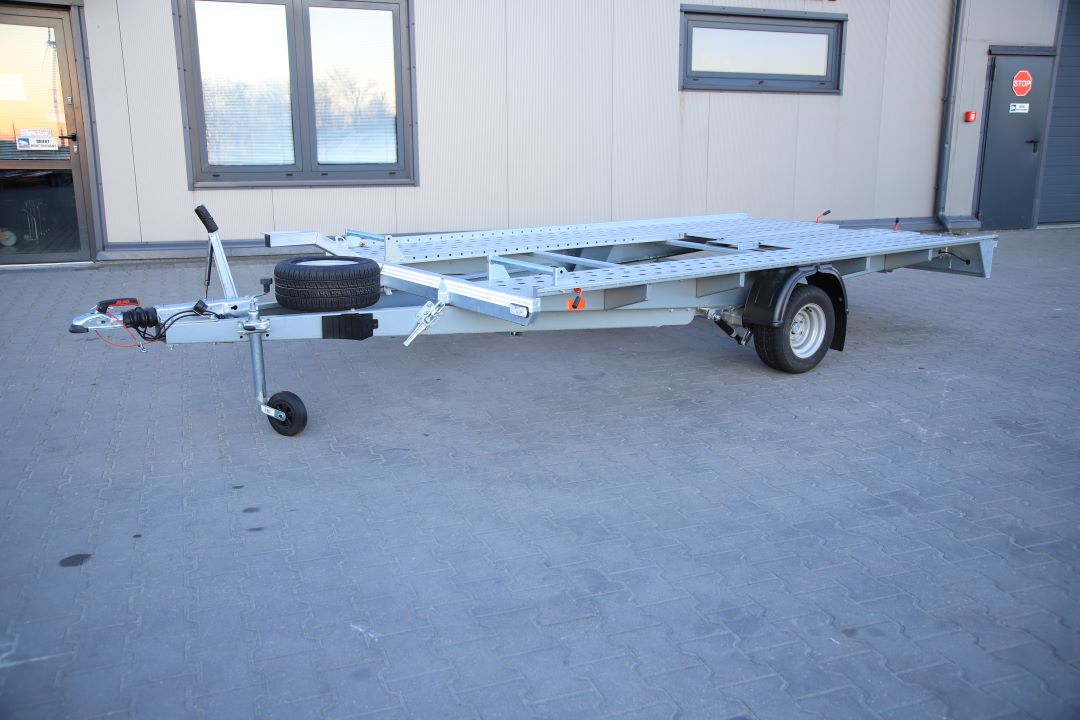
A car transporter must match the vehicle and the route
A car transporter should not be selected by price or platform length alone. The key question is whether a specific model can legally and safely carry the vehicles you plan to transport. Occasional transport of a small city car requires a different transporter than regular work with SUVs, vans, construction machines or damaged vehicles.
GVW, own weight and real payload
GVW is the maximum allowed weight of the transporter with the load. It is not the same as payload. Always compare GVW, own weight and real payload, then check the towing limits of the vehicle. A model that looks similar in price can offer a very different practical loading capacity.
Platform length, width and entry angle
The platform should allow stable vehicle positioning and correct weight distribution. Width, ramp spacing and entry angle should match the wheelbase, ground clearance and tyre track of the vehicles being carried.
One, two or three axles?
Single-axle transporters are lighter and easier to manoeuvre. Two axles improve stability and are often the best choice for regular car transport. Three-axle models make sense for heavier loads and more specialised work.
Ramps, securing points and equipment
Check ramps, securing points, wheel chocks, straps, winch, support wheel and tyres. These details decide how safe and convenient loading will be.
If you are unsure which model fits your work, send the vehicle weight, dimensions, expected GVW and planned routes to Witmar. This makes it easier to select the right transporter.